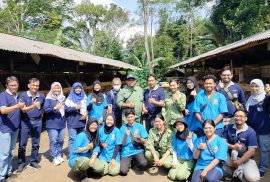
In a vibrant celebration of community, health, and collaboration, the Student Community Service teams (KKN) from Universitas Gadjah Mada (UGM) and Universitas Pembangunan Nasional Veteran Yogyakarta (UPNVY) jointly hosted a large-scale Fun Walk event in Sukorini Village, Manisrenggo Sub-district, Klaten Regency
SDG 1: No Poverty
In this bazaar, permanent and contract education staffs, as well as outsourced workers, received affordable basic necessities containing cookies, syrup, oil, rice, eggs, wheat flour, and instant noodles. In addition, cheap basic necessities were also sold to visitors, such as oil, wheat flour, eggs, and instant noodles.
In this bazaar, there were 22 MSME booths participating. The stalls sold various food and snack products such as fried meatballs, gudeg, bakpia, as well as fashion products, skincare, and various household items such as daster, nuskin skincare, and batik clothes. Orchids are also available which are in great demand by visitors. There is also a special promo for FVM UGM’s superior product, namely Omega 3, 6, 9, DHA and EPA Eggs.
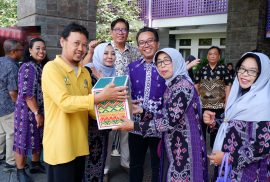
The event was also enlivened by a mini fashion show featuring hand-made ethnic clothes from Lurik Sriti Gamplong. From the head of Dharma Wanita, Mrs. Yulaeni Teguh Budipitojo, to the vice deans, lecturers, and education staff, they all did the catwalk to showcase the lurik clothes. Furthermore, the event was supported by: Januputra Farm, Farm Berkah Sawung Sejahtera, Elita Kerudung, Crystal Petlove, and Cahaya Proyektor, as well as the donors, namely the DWP FKH UGM members, the Dean and vice deans, and all of the Departments at FVM UGM.
In addition to the bazaar, in order to welcome the holy month of Ramadan, DWP FVM also held social activities by visiting the Almarina Orphanage in Gunungkidul and the Ulil Albab Orphanage located in Banguntapan. The DWP FVM team provided basic necessities and clothing to these orphanages.
In addition, the DWP team also donated the homes of retired lecturers and education staff. This event aims to maintain the bond of fraternity between the extended family of FVM UGM. The existence of this activity is expected to be able to increase social awareness in the campus environment, provide benefits to others, and as moral and material support for those in need.
This bazaar and social service activity supports the values of the Sustainable Development Goals (SDGs), namely, SDG 1 No Poverty, SDG 2 Zero Hunger, SDG 10 Reduced Inequality, SDG 8 Decent Work and Economic Growth, SDG 5 Gender Equality, SDG 16 Peace, Justice, and Strong Institutions, SDG 17 Partnerships for the Goals.
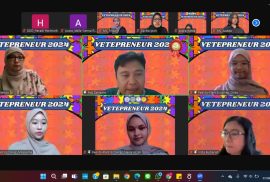
The Business Plan Competition was conducted in three stages. Stage I (August 11-16, 2024) involved the collection of Business Model Canvases (BMC), from which the top 10 teams were selected. Stage II (August 23-30, 2024) involved the submission of proposals, and Stage III (September 7, 2024) was the final presentation, which was attended by five teams. From the BMC selection process by the jury, three best proposals were obtained: Trashmart, Fungapack, and Peel-To-Plant EcoWarp.
On September 7, 2024, the final round took place, featuring 5 teams with the best proposals. Participants were required to submit a PowerPoint presentation, which was to be delivered within 25 minutes, divided into two sessions: 15 minutes for presentation and 10 minutes for Q&A with the judges. The judges for this event were Dr. drh. Vista Budiariati, M.Si. as the first judge, Dr. drh. Woro Danur Wendo, M.Sc. as the second judge, and Dr. Faiz Zamzami, SE., M. Acc., QIA.,CMA., CAPF., CAPM., CRA., CACP. as the third judge. The presentation and Q&A sessions of the finalists were facilitated by Frida Aeni and Azalea Perwita Safitri as moderators. After the judging process, the winners of the business competition were announced: TrashSmart, Fungapack, and Peel-To-Plant EcoWarp. The event concluded with a group photo session.
Through this activity, participants gained valuable insights to develop their entrepreneurial spirit, aligning with SDG 1:No Poverty and SDG 8: Decent Work and Economic Growth. We hope that this event will encourage young veterinarians to become not only clinically competent but also creative in generating new business opportunities. This event also aims to emphasize the importance of perseverance in business, as success does not come overnight. Preparation for this event was not without its challenges. However, effective communication among committee members allowed us to overcome these obstacles and achieve our goals.
Contributor: Diva Pendriana
Contact Person : +62 856 0779 9110 (Ravel Caesar Lesmana)
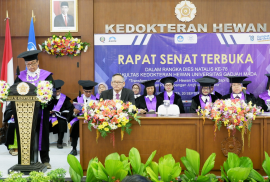
After that, the next agenda was the submission of the 2024 Dean’s Report by Prof. drh. Teguh Budipitojo, M.P., Ph.D as Dean of FVM UGM. The theme raised by the 78th Anniversary of FVM UGM was “Transformation of the Veterinary Profession in Facing the Digital Era and the Development of Artificial Intelligence”.
Then the event continued with a Scientific Oration delivered by the Head of the Department of Surgery and Radiology, Dr. drh. Dhirgo Aji, M.P. with the title “Osteoarthritis in Dogs: Problems, Therapy, and Economic Impact on the Dog Owner Community in Indonesia”. Osteoarthritis (OA) is a musculoskeletal disorder that is often found in pets, especially dogs. Currently, osteoarthritis in dogs is the most common case of articular disease in Indonesia and other countries in Asia, Europe and even America. The impact of disrupting the welfare of animals suffering from OA is very clearly visible in symptoms of pain that are so severe that the animal walks lamely or is even unable to stand. (SDG 15 Life on Land)
In his speech, Dr. Dhirgo Aji explained the types of medicines used as therapy for dogs suffering from OA, as well as surgery that must be carried out if the condition gets worse. The type of medication used is Non-Steroidal Anti-inflammatory and surgical procedures include Total Hip Replacement and Total Knee Replacement. It is also important to note that these medical and surgical procedures require quite a bit of money. (SDG 4 Quality Education)
He also reminded owners of the importance of pet welfare. Pet owners must be physically, mentally and economically prepared to treat pets exposed to disease, especially OA, because this is a form of ensuring that animal welfare is met properly. (SDG 15 Life on Land, SDG 4 Quality Education)
Moreover, FVM UGM also gave incentives to outstanding students and their supervisors as a form of appreciation for their achievements such as academic and non-academic competitions. The 2024 Faculty of Veterinary Medicine Senate Open Meeting ended with the cutting of tumpeng (Indonesian traditional dish) as a celebration of the 78th anniversary of the Faculty of Veterinary Medicine, Universitas Gadjah Mada. (SDG 1 No Poverty, SDG 2 No Hunger)
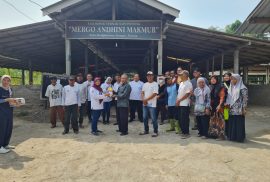
During the event, the FKH UGM team performed reproductive examinations on the cattle using ultrasonography (USG) technology and provided vitamin supplementation. Additionally, they administered deworming medication for the cattle that were not pregnant, ensuring that the livestock received comprehensive care. The active participation of faculty staff and students undergoing reproductive internships significantly strengthened the implementation of this initiative.
Mr. Mulyono, the head of the Mergo Andhini Makmur Livestock Group, expressed his concerns during his speech, highlighting the severe impacts of the COVID-19 pandemic and outbreaks of Foot and Mouth Disease (FMD) and Lumpy Skin Disease. He reported a staggering 50% decrease in the population of female cattle, with the number dropping from 80 to approximately 40. “This situation is exacerbated by the difficulty female cattle have in becoming pregnant after the disease outbreaks,” Mr. Mulyono explained.
The examinations conducted by the FKH UGM team revealed that the ovarian conditions of some cattle that were struggling to conceive were actually good. However, there was a tendency for these animals to show difficulty in exhibiting estrus signs. The provision of vitamins and mineral supplements is expected to help restore the cattle’s health and improve their estrous cycles.
“Through this community service, we hope to re-establish cooperation and guidance from the university, which had been interrupted due to the COVID-19 pandemic,” Mr. Mulyono stated. This sentiment reflects the importance of civil society partnerships in achieving sustainable development goals, particularly in empowering local farmers and enhancing their livelihoods.
The event also featured traditional food prepared by the women’s farming group, showcasing local culture and community spirit. This aspect of the program not only nourished the participants but also highlighted the role of women in agriculture and food production, aligning with the SDGs focused on the empowerment of women.
The Department of Reproduction and Obstetrics at FKH UGM is committed to fostering ongoing collaboration and providing further guidance to support the recovery of this livestock group. Through this partnership, it is hoped that a sustainable positive contribution can be made to the welfare of farmers and the cattle population in Indonesia.
In conclusion, the collaboration between FKH UGM and the Mergo Andhini Makmur Livestock Group exemplifies a successful model of development assistance that integrates education, health, and economic resources. By addressing the challenges faced by local farmers and livestock, this initiative not only aims to restore cattle health but also to empower the community towards sustainable agricultural practices.
Contributor: Yosua Kristian Adi

Mastitis is a type of disease that attacks the goat’s mammary glands, causing swelling in the udder. As a result, the mother goat cannot provide milk for the kid. Meanwhile, the selling point of Etawa crossbreed goats is in the quality of their goat milk. Therefore, Mastitis disease can greatly affect milk production which has an impact on consumption and food security.
If not treated quickly and properly, this disease can affect the economic income of farmers. This disease sometimes forces farmers to sell their livestock at low prices and have to buy new livestock so that farmers experience losses. Once infected, of course it will increase the cost of goats care.
To help farmers overcome this disease, the Faculty of Veterinary Medicine UGM held a counseling on how to properly manage Etawa crossbred goats, including maintaining the cleanliness of the cage. This is an education for sustainability because it can mitigate bad things in the future, both in terms of food production and the economy. This activity is in accordance with SDG 4 quality education and SDG 2 zero hunger.
If carried out properly and routinely, the form of community service from PPDH FKH UGM can help alleviate poverty with empowered farmers and produce Etawa crossbred goat milk with the best quality and can be sold at a profitable price. This is in accordance with SDG 1 zero poverty.

Topik yang diangkat dalam pidato tersebut termasuk dalam salah satu neglected tropical disease yang paling sering ditemukan terutama di Indonesia, yaitu Fasciolosis atau infeksi yang disebabkan cacing Fasciola. Penyakit ini sering ditemui pada hewan ternak, terutama sapi. Jenis Fasciola yang banyak ditemukan di Indonesia adalah Fasciola gigantica. Ini merupakan hal yang patut kita soroti karena ini berpengaruh pada kesehatan dan kualitas ternak di Indonesia. Fasciola pada ternak akan berpengaruh pada penurunan produktivitas serta fertilitas.
Dalam pidatonya, beliau juga menyebutkan bahwa Lymnaeidae sendiri adalah jenis siput yang diketahui mampu menjadi perantara terhadap penyebaran Fasciola. Di Indonesia, yang memiliki iklim tropis dengan kondisi lingkungan yang cocok untuk perkembangan parasit sepanjang tahun, infeksi cacing hati melalui keberadaan Lymnaeidae tersalurkan melalui siput yang berdiam di sawah dan diantara batang padi. Selain itu, kadang beberapa peternak masih menggunakan manure segar untuk pupuk pertanian dan menggunakan sisa hasil pertanian untuk pakan ternak dimana cacing ini dapat berkembang biak.
Penanggulangan pada kasus ini dapat dilakukan dengan cara memberikan obat cacing (antelmintik) pada sapi secara berkala. Pemberian obat cacing ini juga harus dibarengi dengan pencegahan. Pencegahan infeksi fasciolosis di Indonesia dapat dilakukan dengan pengelolaan kotoran ternak dengan cara pembuatan kompos dan pelayuan pakan. Beliau juga menyimpulkan bahwa peningkatan pengetahuan peternak masih sangat perlu dilakukan melalui program pengabdian Masyarakat.
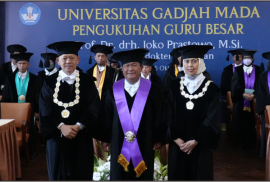
Selanjutnya, Prof. Joko yang juga pernah menjabat sebagai dekan FKH pada periode 2012-2016 ini mengadakan acara syukuran di Auditorium Fakultas Kedokteran Hewan. Acara syukuran ini dihadiri oleh seluruh dosen dan tendik. Dalam acara ini para undangan menikmati hidangan yang lezat diiringi musik yang khas dari tahun ‘80an.
Penulis: Dea Dwi Novita