
Highlights
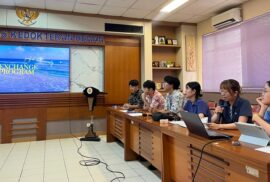
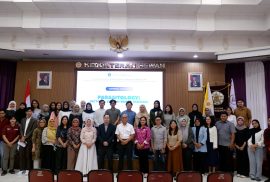
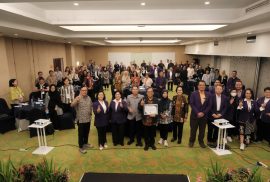
“Animals are consistently treated merely as commodities and disregarded as living beings—despite their vital importance to human health and well-being—leading to mismanagement and disaster,” stated veterinarian Wiwiek Bagdja, former Chairperson of the Indonesian Veterinary Medical Association (PDHI) and an animal welfare advocate, at the beginning of her presentation.
Animal welfare encompasses all matters relating to the physical and mental state of animals—measured against their natural behaviors—that must be implemented and enforced to protect them from improper treatment by humans utilizing them. This means that whenever animals are used by humans for various purposes, all elements of animal welfare must be upheld for the animals under their care. Veterinarian Hastho Yulianto, MM, emphasized in his presentation that “The animal welfare standards apply to all animal owners, individuals who handle animals as part of their work, and owners of animal husbandry facilities.”
Animal welfare has become a matter of both national and international public concern, and is even a requirement in the international trade of live animals and animal products. To ensure the fulfillment of animal welfare standards and in accordance with prevailing laws and regulations, the Regulation of the Minister of Agriculture of the Republic of Indonesia No. 32 of 2025 concerning the Implementation of Animal Welfare was issued. This regulation is intended to serve as a guideline for the general public and government authorities alike, fostering an understanding of and compliance with animal welfare requirements. With rising rates of animal ownership for various purposes—alongside growing public awareness and concern for animal welfare—clear regulations are needed to guide this awareness and concern along the right path. Understanding animal welfare is complex; it requires a solid knowledge base and practical experience. Therefore, disseminating a correct understanding is crucial to prevent misconceptions and ensure proper implementation across all levels of society. Given the frequent public misunderstandings regarding animal welfare—and instances where the concept is exploited for inappropriate purposes—Minister of Agriculture Regulation No. 32 of 2025 regulation is a crucial one to understand in its entirety, so that any undesirable outcomes can be minimized.
“Given this context, it is highly urgent that this seminar be held early in 2026. Therefore, the DKI Jakarta chapter of PDHI is facilitating access for all parties to obtain comprehensive and clear information. Furthermore, there is absolutely no fee for seminar participants,” stated Kumaladewi, DVM., MFSc, Secretary of the PDHI DKI Jakarta chapter and chair of the seminar organizing committee.
Animal welfare cannot be separated from animal health status; the two form an integral whole, with health status itself serving as a parameter for welfare. The primary goal of animal welfare is quality of life, which is linked to the animal’s mental experiences. Health is a crucial aspect of welfare because disease or injury causes discomfort—such as pain, confusion, and distress—which are mental states. An animal experiences good welfare when it is healthy, comfortable, well-nourished, and safe; free from unpleasant states like pain, fear, and distress; and able to express behaviors essential to its physical and mental well-being. Good animal welfare requires disease prevention and proper veterinary care; appropriate housing, management, and nutrition; a safe and positively stimulating environment; and humane handling, slaughter, or culling.
Maintaining animal health—which ultimately leads to good welfare—requires collaboration among various parties, including owners, caretakers, and veterinarians. This cooperation is pivotal in assessing an animal’s welfare status. Veterinarians play a key role in guiding owners, caretakers, and others involved in animal care to ensure health and welfare needs are met. Beyond maintenance and prevention, veterinarians are also responsible for restoring health when animals fall ill. These duties cannot be performed effectively without the necessary knowledge and a strong sense of responsibility; all tasks are carried out based on competencies acquired through rigorous and extensive education.
Veterinary education in Indonesia was established over a century ago during the Dutch colonial era, a time marked by outbreaks of animal diseases affecting livestock—which served as vital sources of clothing, food, and labor for the military, transport, and agricultural sectors. The initiative to establish veterinary education was intended to assist the colonial government in safeguarding supply chains for food and other animal-derived resources. However, to date, there is no single regulation governing veterinary education or veterinary services. Such regulation is crucial to ensuring the quality of services provided to the public and the state, thereby guaranteeing accountability in the maintenance of animal health and welfare.
Prof. Teguh Budipitojo, DVM., Ph.D., Dean of the Faculty of Veterinary Medicine at Universitas Gadjah Mada, Yogyakarta, elaborates: “Although Indonesia possesses regulations concerning higher education, livestock and animal health, wildlife, and aquatic animals, there is currently no law that specifically and comprehensively regulates professional veterinary education and services (a Veterinary Medicine Regulation). Existing regulations are sectoral in nature, focusing on production animals, conservation, and fisheries, while veterinary services for companion animals lack an adequate legal basis. Consequently, the regulation of the veterinary profession is fragmented, potentially leading to legal uncertainty and disparities in service quality. Therefore, a Veterinary Medicine Law is required as lex specialis to guarantee educational quality, service standards, registration and licensing systems, and professional development through a Veterinary Statutory Body, while simultaneously strengthening the ‘One Health’ approach regarding animal, human, and environmental health.”
In light of this, the Association of Indonesian Veterinary Medicine Faculties and the Indonesian Veterinary Medical Association (PDHI) submitted a Bill on Veterinary Education to the House of Representatives of the Republic of Indonesia (DPR RI), which was subsequently included in the 2019–2024 National Legislation Program. However, the bill was never deliberated by the DPR RI before that term concluded. Consequently, the Bill on Veterinary Education and Services was resubmitted for the 2024–2029 term, with the hope that it would receive prompt attention and deliberation; yet, to date, it has not been designated a priority.
Therefore, this seminar aims to garner public support to urge legislators to prioritize the Bill on Veterinary Education and Services in the annual agenda, thereby providing legal certainty for relevant stakeholders and enabling them to operate under legal protection. This point was emphasized at the outset of the seminar by MTh. Widiastuti, DVM., Chair of the PDHI DKI Jakarta Chapter, in her opening remarks: “Veterinarians, as professionals bound by inherent competencies, require regulatory support from the state regarding veterinary matters—support that is closely linked to the provision of animal health and welfare.” This initiative aligns with the Sustainable Development Goals (SDGs), specifically SDG 3 (Good Health and Well-being), SDG 4 (Quality Education), SDG 12 (Responsible Consumption and Production), and SDG 17 (Partnerships for the Goals).
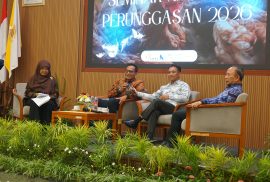
“Poultry Outlook 2026–2027: Resilience and Sovereignty of the National Poultry Industry for Food Stability Amidst Dynamic Import Policies, Strategic Investments, and Strengthening of the Veterinary System”
The Faculty of Veterinary Medicine, Universitas Gadjah Mada, held the National Poultry Seminar 2026 as a strategic forum that brought together government officials, academics, industry players, practitioners, and livestock farmers to discuss the direction of national poultry industry development in supporting Indonesia’s food security towards Golden Indonesia 2045. The above-mentioned theme reflects the importance of strengthening the poultry sector as one of the main foundations of national animal protein providers as well as driven power of Indonesian economy. This seminar was held simultaneously as the opening agenda of the 80th Anniversary of the Faculty of Veterinary Medicine, Universitas Gadjah Mada (FVM UGM).
The event began with opening remarks from the Rector of UGM, represented by Prof. Dr. Puji Astuti, S.Si., M.Sc., Apt. In her remarks, she conveyed that the 80th anniversary of the Faculty of Veterinary Medicine (FVM) UGM is not merely a celebration of the institution’s history, but also a reflection of the long-standing contribution of veterinary academia in supporting the development of the livestock sector, animal health, veterinary public health, and national food security. The Dean represented by Prof. Agung Budiyanto, DVM., M.P., Ph.D., also expressed his appreciation to all speakers, partners, sponsors, and participants who attended the national seminar.
The keynote speech was delivered by Andi Amran Sulaiman, represented by Prof. Dr. Ir. Ali Agus, DAA., DEA., IPU., ASEAN Eng. In his remarks, he conveyed that the government has demonstrated a strong commitment to achieving food self-sufficiency by strengthening national regulations, enhancing the chicken industry ecosystem, strengthening corn reserves and storage, and building cross-sector synergies with various stakeholders.
The seminar discussion highlighted Indonesia’s potential to become a global food barn. The speakers emphasized that this goal can be achieved through appropriate policies, strong political commitment, multi-stakeholder synergy, and consistent implementation on the ground. In the first session, moderated by Dr. Dwi Priyowidodo, DVM. the first speaker, Ir. Achmad Dawami, S.Pt., presented material on the implications of import and investment regulations for poultry businesses. He emphasized that the poultry sector is not simply a business activity, but rather a strategic national infrastructure that plays a crucial role in meeting the nation’s protein needs quickly, affordably, and sustainably. He noted that the national poultry industry continues to show significant growth in line with the increasing demand for animal protein. However, the industry still faces challenges such as supply-demand imbalances, potential oversupply, overlapping regulations, and the need for synchronization between institutions to create more effective and equitable industry governance.
The second speaker, Ir. A. Bagus Pekik, S.Pt., emphasized that the quality of a nation is greatly influenced by the protein sufficiency of its population. In this context, the poultry industry holds a strategic position because it can provide a cheap, easily accessible, and quickly produced source of protein, while simultaneously providing a broad multiplier effect on the national economy. He also highlighted several key challenges facing the poultry industry, ranging from fluctuating feed raw material prices, weak downstreaming and the cold chain, to disparities in production between regions, which are still concentrated on the island of Java. Therefore, strengthening the industrial ecosystem from upstream to downstream is necessary to achieve national protein security equitably.
Meanwhile, H. Singgih Januratmoko, BVM., M.M. outlined the realities faced by independent livestock farmers in the 2026–2027 period. He explained that farmers still face pressures in the form of rising production costs, limited access to capital, low technological mastery, and fluctuating selling prices. However, farmers are beginning to demonstrate their ability to adapt through modernizing housing systems and implementing closed houses to increase business efficiency and productivity.
In the second session moderated by Dr. Yuli Purwandari, DVM., M.P., Dr. I Ketut Wirata, DVM., M.Si. discussed strengthening the national veterinary system as the foundation of food security and national poultry product safety. He emphasized that chicken and egg commodities are the sectors most ready to support the Free Nutritious Meal program because they have a continuously increasing production trend, a national surplus condition, and a relatively low dependence on imports. Furthermore, he said that the poultry sector has a large contribution to the Gross Domestic Product (GDP) of livestock, providing community protein, absorbing labor, and earning foreign exchange. However, challenges such as fluctuations in DOC and feed prices, uneven distribution, and long supply chains still require shared attention. As an effort to strengthen, the government is encouraging the development of integrated chicken downstreaming, the construction of disease-free compartments, and strengthening food safety assurance through the ASUH principle (Anan (Safe), Sehat (Healthy), Utuh (Whole), and Halal) to increase the competitiveness of Indonesian poultry products in the global market.
Next, Prof. Dr. Michael Haryadi Wibowo, DVM., M.P., presented the 2026–2027 poultry disease projections and their implications for biosecurity and national production stability. He explained that diseases such as Newcastle Disease (ND) and Avian Influenza (AI) remain major threats due to the high mutation rate of RNA viruses, which gives rise to numerous new variants. In addition to disease threats, issues of antimicrobial resistance, multiple infections, immunosuppression, and weak biosecurity implementation at the farm and transportation levels are also serious challenges that require collective attention. Therefore, consistent and sustainable biosecurity implementation is considered key to maintaining the stability of the national poultry industry.
In final presentation, Desianto Budi Utama, DVM., M.Sc., Ph.D., discussed the feed industry’s strategy for dealing with fluctuating corn and soybean meal (SBM) prices. Considering that approximately 70–75% of poultry production costs come from feed, formulation efficiency and strengthening the logistics system are crucial factors for the industry’s sustainability. He explained that the national feed industry still faces challenges such as high corn price volatility, limited raw material stocks, dependence on imported materials, and high inter-regional distribution costs. Developing local raw materials is considered a potential solution, although it still faces challenges related to quality, anti-nutritional factors, and economic efficiency.
The 2026 National Poultry Seminar is expected to foster stronger collaboration between the government, academia, industry, and livestock farmers in building a more resilient, competitive, and sustainable poultry sector. This cross-sector synergy is a crucial step in supporting national food security and realizing Indonesia as a global food production hub in the future. This event supports several Sustainable Development Goals (SDGs) such as SDG 1 No Poverty, SDG 2 Zero Hunger, SDG 4 Quality Education, SDG 8 Decent Work and Economic Growth, SDG 12 Responsible Consumption and Production, SDG 15 Life on Land, and SDG 17 Partnership for the Goals.
“Poultry Outlook 2026–2027: Resilience and Sovereignty of the National Poultry Industry for Food Stability
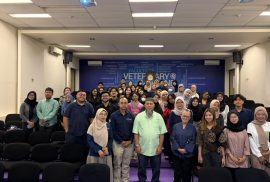
Yogyakarta, 17 June 2026 – The Department of Pharmacology, Faculty of Veterinary Medicine, Universitas Gadjah Mada (FVM UGM), organized a Guest Lecture
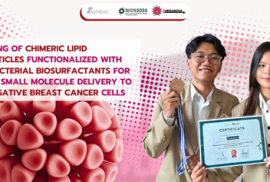
In this competition, the Faculty of Veterinary Medicine UGM was represented through “Theranova,” a collaborative inter-university team comprising students from Universitas Indonesia, Universitas Brawijaya, Universitas Andalas, and Universiti Malaya, alongside UGM. The Faculty of Veterinary Medicine UGM was represented by two students, Raditia Luki Ananta and Evelyn Hartono.
Under the supervision of Prof. Dr.rer.nat. apt. Adam Hermawan, M.Sc., Professor at the Faculty of Pharmacy UGM, the team presented their research entitled “Engineering of Chimeric Lipid Nanoparticles Functionalized with Di-Rhamnolipid for Selective Delivery of PGV-1 in Triple Negative Breast Cancer Cells.” This research focused on developing a drug delivery system based on chimeric lipid nanoparticle modeling. The key innovation lies in utilizing the biosurfactant di-rhamnolipid to enhance the selectivity and delivery efficiency of PGV-1, a promising small-molecule anticancer candidate, specifically targeting Triple Negative Breast Cancer (TNBC) cells. The chimeric lipid nanoparticle was engineered by integrating di-rhamnolipid to enable specific targeting of TNBC cells, which are known for their aggressive nature and lack of conventional therapeutic targets. This approach is expected to improve therapeutic precision while minimizing systemic side effects.
The BIOS 2025 competition was conducted through a rigorous selection process from August to November 2025. The stages included abstract submission, development of a project website as a research showcase platform, and fulfillment of defined project deliverables. In the final round, the Theranova Team presented their innovation before a panel of judges. Their strong conceptual framework, in-depth bioinformatics analysis, and robust methodological design were key factors contributing to their success in securing the bronze medal.
Raditia Luki Ananta, team leader of Theranova, stated, “We plan to continue this research in collaboration with Prof. Adam Hermawan and also with Badan Riset dan Inovasi Nasional (BRIN) to develop a prototype ready for preclinical testing.” Evelyn Hartono added, “This collaboration with BRIN represents a strategic step to accelerate the translation of laboratory research into real clinical applications, particularly for TNBC therapy.” These statements reflect the team’s commitment to advancing impactful and translational scientific innovation.
This achievement represents a tangible contribution by academic communities in supporting the global Sustainable Development Goals (SDGs) established by the United Nations, particularly SDG 3 (Good Health and Well-Being), SDG 4 (Quality Education), and SDG 17 (Partnerships for the Goals). Through innovation in TNBC therapy, this research aims to provide safer and more effective therapeutic solutions for breast cancer patients and contribute to reducing mortality from non-communicable diseases through advances in pharmaceutical technology (SDG 3). Furthermore, this accomplishment reflects the quality of higher education that integrates research-based learning and innovation. Participation in international competitions enables students to apply theoretical knowledge in practical contexts, particularly in advanced bioinformatics and molecular biology (SDG 4). In addition, multidisciplinary collaboration across institutions, including UGM, UI, UB, Universitas Andalas, and Universiti Malaya, along with active mentorship from academic supervisors, demonstrates strong institutional synergy and serves as an example of strategic partnerships in generating innovations with broad societal impact (SDG 17).



The 79th Anniversary of the Faculty of Veterinary Medicine UGM Began with Yogyakarta Andong Festival

On Thursday, August 14th, 2025, the 79th anniversary series of the Faculty of Veterinary Medicine, Universitas Gadjah Mada (FVM UGM) officially started. The series kicked
Faculty of Veterinary Medicine, Universitas Gadjah Mada (FVM - UGM) has again inaugurated a professor, namely Prof. Dr. drh. Asmarani Kusumawati, M.P., in the field of Molecular Veterinary Reproductive Technology (20/5).