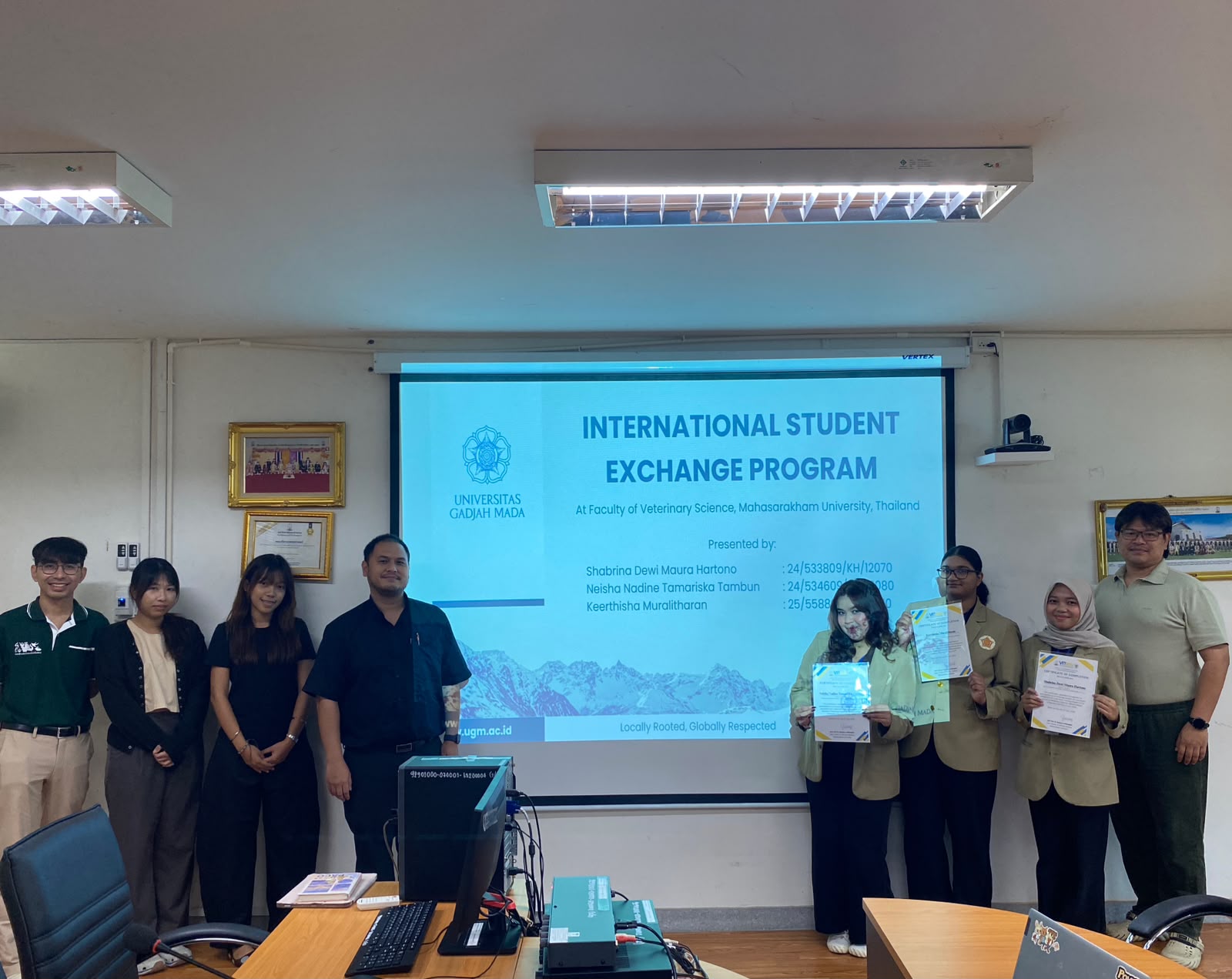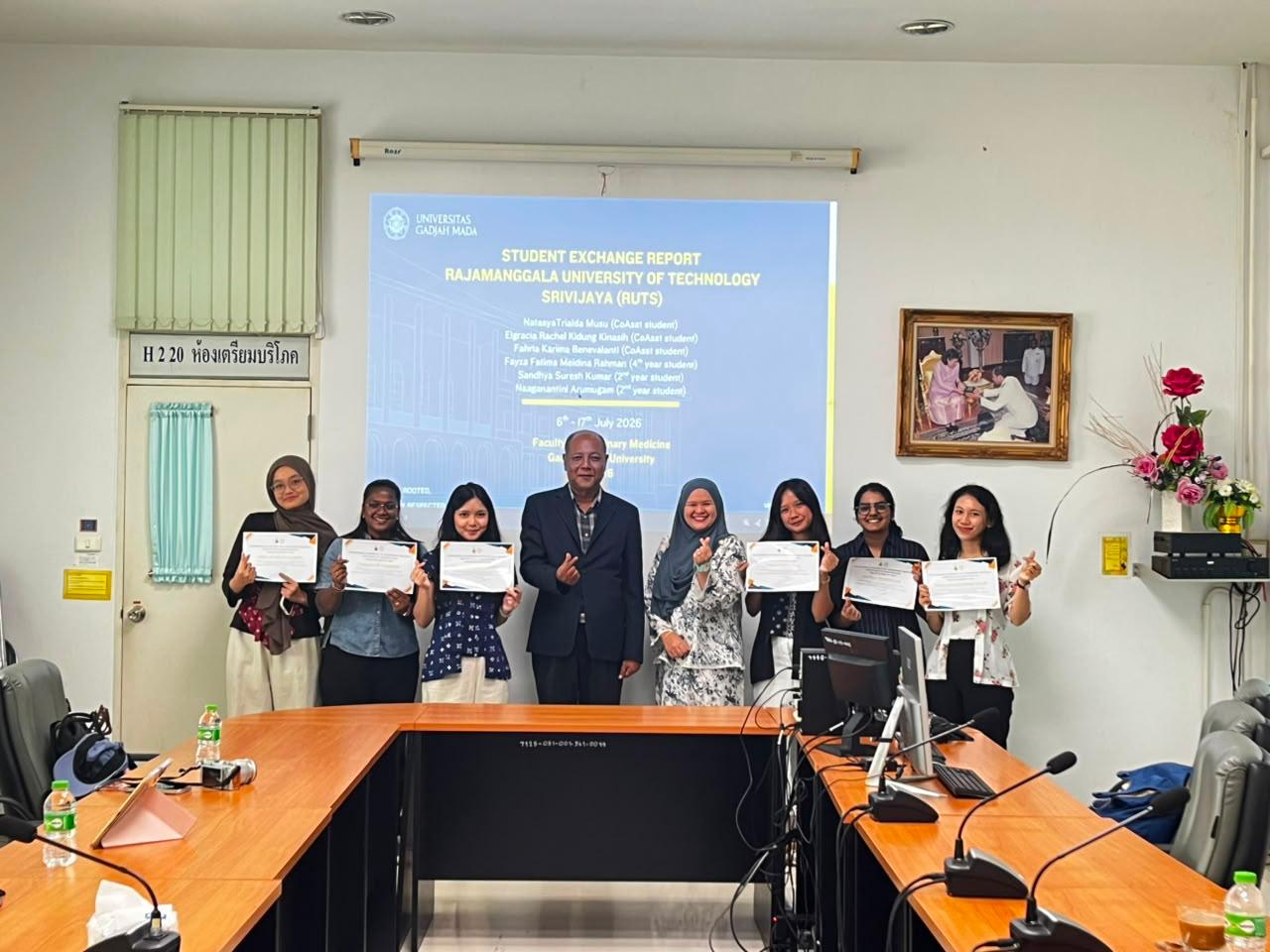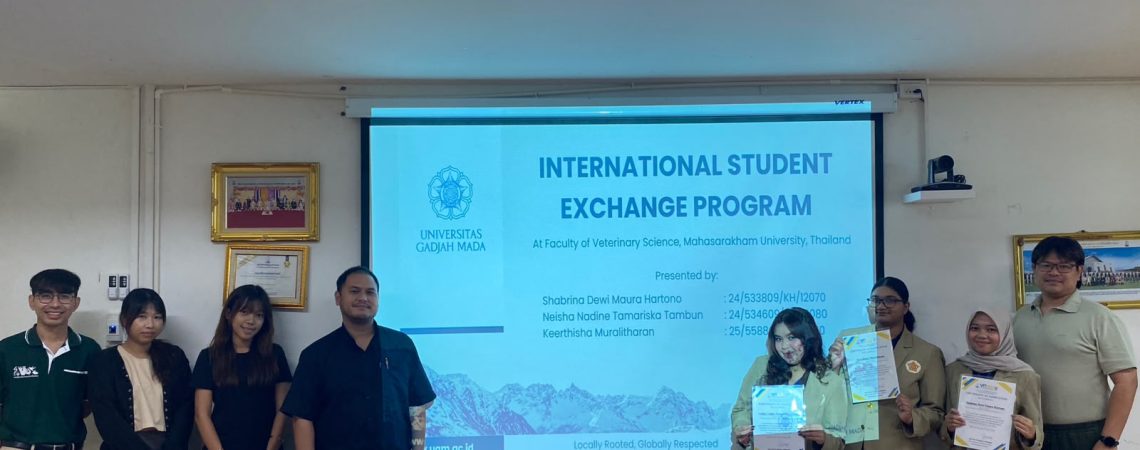
Three veterinary medicine students, Shabrina, Nadine, and Keertisha, from Universitas Gadjah Mada participated in a two-week international academic exchange program at Mahasarakham University (MSU), Thailand, on 6–27 July 2026. The program provided an opportunity to experience veterinary education in Thailand through academic sessions, laboratory activities, clinical exposure, hands-on training, and cultural exploration.
The exchange involved a variety of academic activities covering both theoretical and practical aspects within the veterinary medicine field. The participants attended sessions in diagnostic imaging, veterinary anatomy, virology, immunology, physiology, reproductive biotechnology, food and milk hygiene, and the responsible use of animals for scientific purposes. During the radiology session, the participants were introduced to X-ray interpretation, while the anatomy practical focused on comparing the digestive systems of different animal species. The laboratory sessions further provided exposure to veterinary laboratory procedures and their applications in animal health and disease investigation.
Clinical learning was also an important part of the program through activities at the Animal Hospital of Mahasarakham University. The participants were exposed to a wide range of cases involving different species, from small companion animals to large animals, under the guidance of veterinarians at the hospital. They observed clinical examinations, diagnostic procedures, and several surgical cases. One of the memorable cases involved a cat with calcium accumulation in the gingival area, providing an opportunity to observe the clinical and surgical management of an oral condition in a small animal patient.
The program also included practical learning in orthopedics and large animal medicine. During the orthopedic session, the participants learned about fracture management, including cases involving the pelvis and radius-ulna. They also participated in Large Animal Surgery activities and gained further exposure to veterinary procedures involving large animals. These sessions allowed the participants to connect anatomical and theoretical knowledge with practical approaches to patient assessment and management.
A field-based Large Animal Day provided another hands-on learning experience. Together with fifth-year veterinary students from Mahasarakham University, the participants visited a local farm area and worked directly with buffaloes. The activities included physical examinations and reproductive management, particularly CIDR insertion. This experience provided valuable exposure to livestock health management outside the hospital environment while improving the participants’ confidence in animal handling and practical veterinary procedures.
Alongside the academic program, the exchange also encouraged interaction and cultural learning with students and faculty members at Mahasarakham University. Through daily activities and shared experiences, the participants gained insight into the veterinary education system and student life in Thailand while exchanging perspectives with their Thai counterparts. The interactions throughout the program also fostered new friendships and strengthened the connection between students from different academic and cultural backgrounds.
The participants also used their weekends to explore Mahasarakham area and Roi Et Province, experiencing local food, culture, and attractions in northeastern Thailand. Visits to places such as Bueng Phlan Chai, Roi Et Tower, and local temples provided opportunities to learn more about the history and cultural identity of the Isan region. These activities complemented the academic program by allowing the participants to experience everyday life and local traditions beyond the university environment.
The exchange program at Mahasarakham University provided a meaningful combination of academic development, practical training, clinical observation, and cultural exchange. Exposure to different teaching approaches, veterinary cases, laboratory activities, and field practices broadened the participants’ understanding of veterinary medicine while encouraging adaptability and independent learning. The experience also demonstrated the value of international collaboration in developing students’ academic and professional perspectives.
Through the two-week exchange, the participants gained valuable experiences that extended beyond the classroom, from interpreting radiographs and studying comparative anatomy to observing surgery, learning fracture management, conducting physical examinations, and performing reproductive procedures in buffaloes. The program contributed to the development of practical competencies, broader global perspectives, and lasting international connections, supporting the participants’ continued growth as future veterinary professionals.
This activity supports several Sustainable Development Goals (SDGs): SDG 3 (Good Health and Well-being), SDG 4 (Quality Education), SDG 9 (Industry, Innovation, and Infrastructure), SDG 11 (Sustainable Cities and Communities), SDG 15 (Life on Land), and SDG 17 (Partnerships for the Goals).