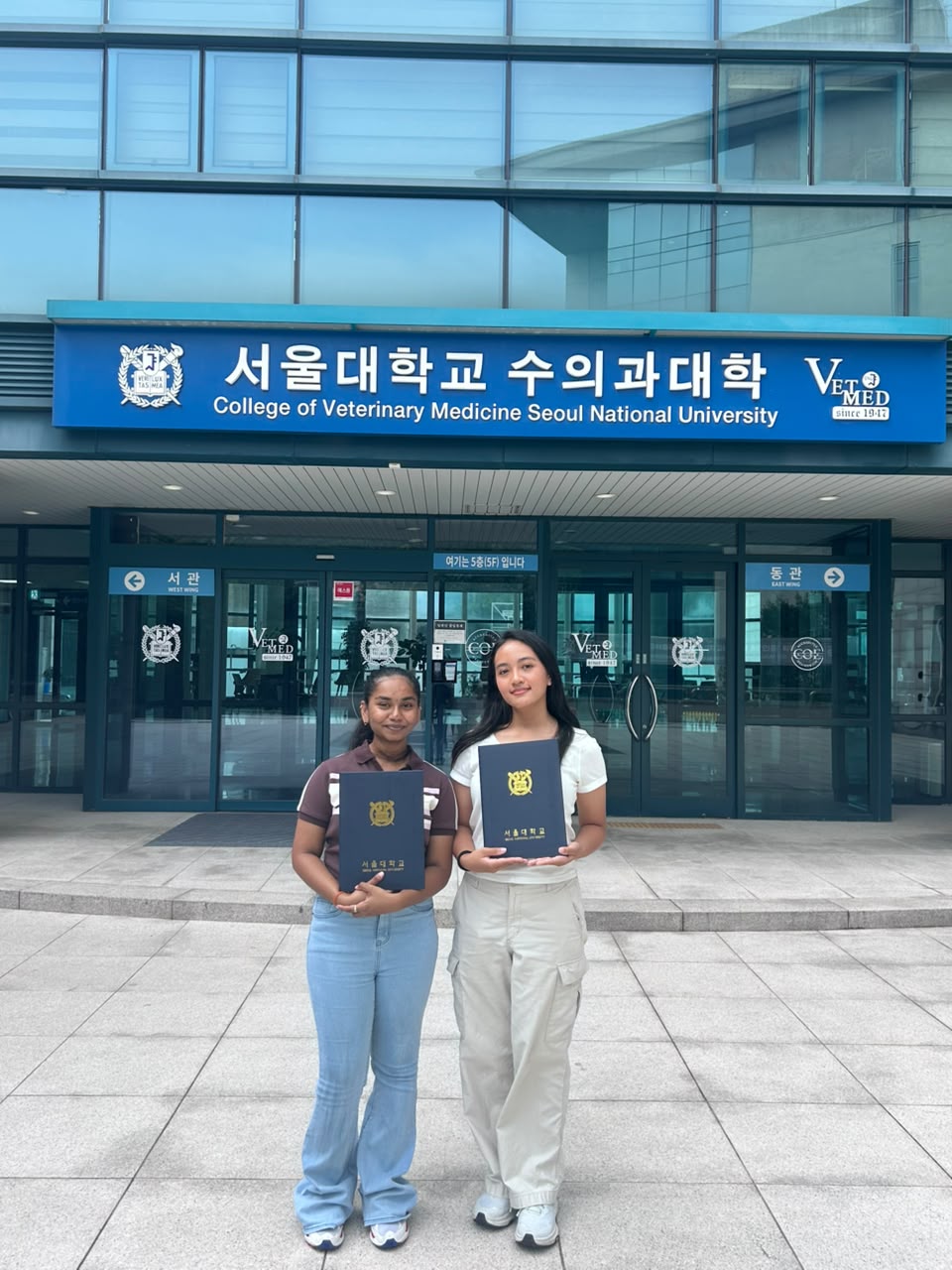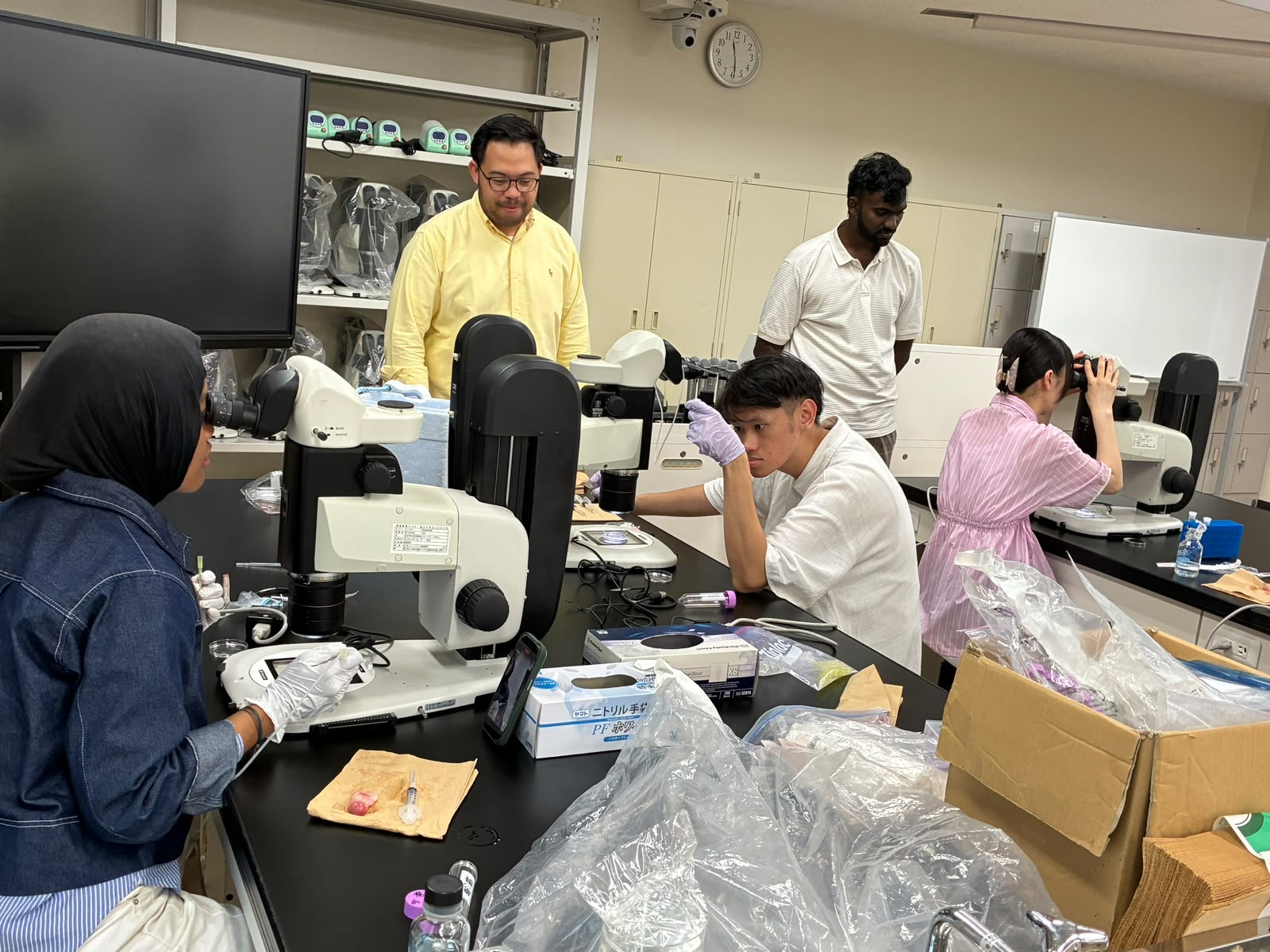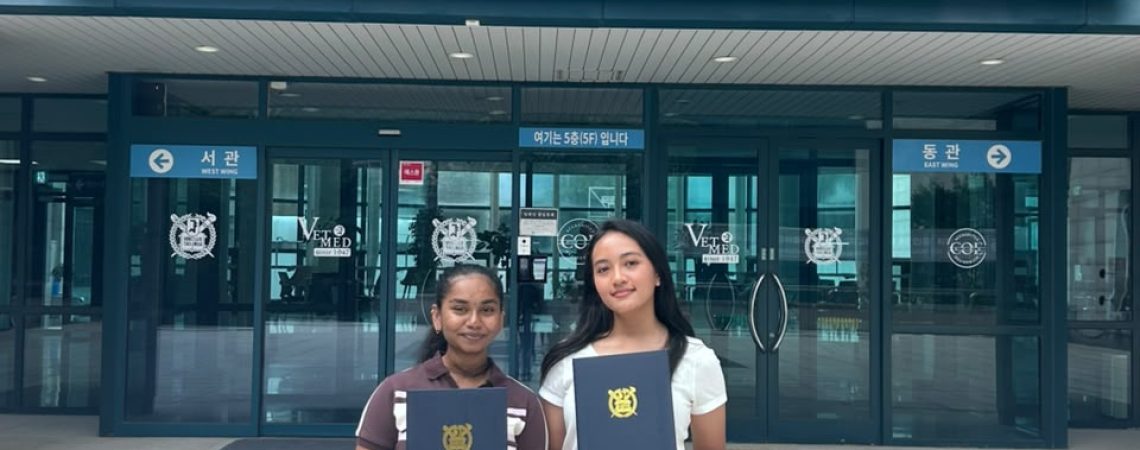
From July 1st to July 28th, 2026, two students from the Faculty of Veterinary Medicine Universitas Gadjah Mada (FVM UGM) participated in a student exchange mobility program at Seoul National University. This one-month program was designed to broaden the students’ global perspectives through academic activities in laboratories, intercultural interaction, and an exploration of the veterinary medical education system in South Korea. The two UGM students, Dorothy and Dhurga, undertook internships at the Department of Physiology and the Department of Theriogenology respectively.
The program began with a welcoming session hosted by their supervising professors, followed by a campus tour to help them familiarize themselves with the surroundings. As the two departments are located in separate buildings, Dorothy and Dhurga conducted individual tours of their respective building areas. Subsequently, they were provided with an overview of the program agenda, which included laboratory observation and preparation, research paper presentations by teaching assistants, and the compilation of a final report for the SNU administration.
In the Department of Theriogenology, the laboratory activities focus on observing HeLa cell subcultures and performing oocyte aspiration from porcine ovaries. Meanwhile, in the Department of Physiology, the focus is on reviewing research journals authored by Prof. Han and his graduate students to gain an understanding of their ongoing projects, followed by face-to-face discussions.
Outside of academic hours, Dorothy and Dhurga spend their free time visiting historical museums and cultural heritage sites, as well as tasting local cuisine.
Entering the second week, Dorothy continues her routine in the Department of Theriogenology, which includes oocyte aspiration from porcine ovaries, monitoring oocyte maturation and in vitro fertilization, and performing HeLa cell transfection. On the other side, in the Department of Physiology, Dhurga is learning the principles and procedures of Western blotting, as well as protein detection using Horseradish Peroxidase (HRP) and Enhanced Chemiluminescence (ECL). Amidst their academic commitments, both students also find time to explore interesting tourist spots and enjoy the beautiful, lush parks in Korea.
In the third week, within the Department of Theriogenology, Dorothy engaged in hands-on practice involving cell transfection, as well as the in vitro maturation and fertilization of porcine oocytes—the latter having been obtained via aspiration. Meanwhile, in the Department of Physiology, Dhurga focused on scientific preparation, research involving animal for experiment, and the preparation of protein samples.
During the fourth week, the activities centred on developing presentation materials for July 21st. This involved various preparatory tasks, including reading a lot of relevant scientific journals to strengthen theoretical understanding within the field of Theriogenology.
Meanwhile, in the Department of Physiology, Dhurga studied behavioural research using mouse models which were having obesity and diabetes. She also observed the dissection of laboratory mice for a study investigating the relationship between diabetes, reactive oxygen species, and Alzheimer’s disease. Over the weekend, both students spent time exploring the area around the Han River, enjoying the refreshing and calming open air.
The presentation of the final paper took place during the fifth week—the last week for Dorothy, who completed an internship in the Department of Theriogenology. She was also required to prepare a report on the outcomes of the in vitro maturation, in vitro fertilization, and cell transfection procedures she had performed. This report and presentation were prerequisites for receiving a certificate confirming the completion of her internship program at SNU. For Dhurga, who interned in the Department of Physiology, the final week was dedicated to learning qPCR procedures and finalizing her end-of-program report.
Overall, this experience proved invaluable in broadening the students’ perspectives on laboratory research, workplace culture, and the technological advancements within the veterinary medical education system in South Korea. Furthermore, this program aligns with several of the United Nations Sustainable Development Goals (SDGs): SDG 3 (Good Health and Well-being), SDG 4 (Quality Education), SDG 9 (Industry, Innovation, and Infrastructure), and SDG 17 (Partnerships for the Goals).