• Tentang UGM
  • simaster
  • Pusat TI
  • Perpustakaan
  • Penelitian
  • Webmail
  • Informasi Publik
  • English
    • English
    • Bahasa Indonesia
Universitas Gadjah Mada Faculty of Veterinary Medicine
Universitas Gadjah Mada
  • About Us
    • Greeting from The Dean
    • History
    • Vision and Mission
    • Quality Assurance
    • Faculty Management
    • Departments
    • Contact
  • Education
    • Veterinary Medicine Study Program and Veterinary Profession Educational Study Program
      • LIST OF COURSES AND MODULE HANDBOOKS
      • SUBJECT COURSES AND DOCUMENTS PORTOFOLIO
      • Academic Guidelines
    • Postgraduate Program
    • International Undergraduate Program
    • Animal Hospital
  • Research
    • Research Ethics Committee
    • COMMUNITY SERVICES
    • RESEARCH
    • PUBLICATION
    • Book
  • Collaboration
    • NATIONAL
    • INTERNATIONAL
  • ADMISSION
  • Downloads
  • Home
  • SDG 2: Zero Hunger
  • (Page 2)
Arsip:

SDG 2: Zero Hunger

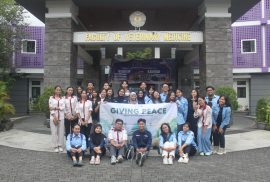
Giving Peace with PMK x KMK x KMMV Faculty of Veterinary Medicine UGM 2025

Student Activity Monday, 5 May 2025

Peace is a situation that needs to be fought for and celebrated together. Based on this belief, the faculty’s religious Students’ Unit Activity (UKM) (PMK – Christian Students Fellowship, KMK – Catholic Students Family, and KMMV – Muslim Students Family) organized a Social Charity
Lihat   Selengkapnya

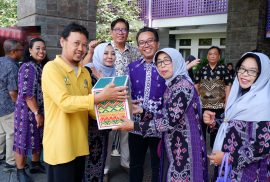
DWP Faculty of Veterinary Medicine UGM Builds Charitable Actions with Ramadhan Bazaar and Social Service

News Wednesday, 26 March 2025

Dharma Wanita Persatuan (DWP) of the Faculty of Veterinary Medicine (FVM) UGM held a bazaar with the theme of Building Bonds: Reviving Cultural Heritage for the Sake of Caring for Each Other in the lobby of the Faculty of Veterinary Medicine, Thursday, March 20, 2025. The event was opened with a joint prayer followed by a speech by the Dean of FVM UGM. In his speech, Prof. Teguh expressed his gratitude, thanks, and appreciation to Dharma Wanita Persatuan for holding the 2025 Ramadan bazaar and social service. This event is expected to benefit the FVM family, stakeholders, alumni, retirees, and the general society.

In this bazaar, permanent and contract education staffs, as well as outsourced workers, received affordable basic necessities containing cookies, syrup, oil, rice, eggs, wheat flour, and instant noodles. In addition, cheap basic necessities were also sold to visitors, such as oil, wheat flour, eggs, and instant noodles.

In this bazaar, there were 22 MSME booths participating. The stalls sold various food and snack products such as fried meatballs, gudeg, bakpia, as well as fashion products, skincare, and various household items such as daster, nuskin skincare, and batik clothes. Orchids are also available which are in great demand by visitors. There is also a special promo for FVM UGM’s superior product, namely Omega 3, 6, 9, DHA and EPA Eggs.

The event was also enlivened by a mini fashion show featuring hand-made ethnic clothes from Lurik Sriti Gamplong. From the head of Dharma Wanita, Mrs. Yulaeni Teguh Budipitojo, to the vice deans, lecturers, and education staff, they all did the catwalk to showcase the lurik clothes. Furthermore, the event was supported by: Januputra Farm, Farm Berkah Sawung Sejahtera, Elita Kerudung, Crystal Petlove, and Cahaya Proyektor, as well as the donors, namely the DWP FKH UGM members, the Dean and vice deans, and all of the  Departments at FVM UGM.

In addition to the bazaar, in order to welcome the holy month of Ramadan, DWP FVM also held social activities by visiting the Almarina Orphanage in Gunungkidul and the Ulil Albab Orphanage located in Banguntapan. The DWP FVM team provided basic necessities and clothing to these orphanages.

In addition, the DWP team also donated the homes of retired lecturers and education staff. This event aims to maintain the bond of fraternity between the extended family of FVM UGM. The existence of this activity is expected to be able to increase social awareness in the campus environment, provide benefits to others, and as moral and material support for those in need.

This bazaar and social service activity supports the values ​​of the Sustainable Development Goals (SDGs), namely, SDG 1 No Poverty, SDG 2 Zero Hunger, SDG 10 Reduced Inequality, SDG 8 Decent Work and Economic Growth, SDG 5 Gender Equality, SDG 16 Peace, Justice, and Strong Institutions, SDG 17 Partnerships for the Goals.Lihat   Selengkapnya

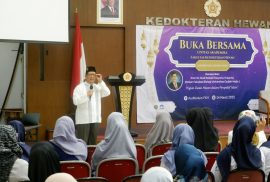
“The World of Animals through Islamic Perspective” at the 2025 Ifthar Party, Faculty of Veterinary Medicine UGM

News Tuesday, 25 March 2025

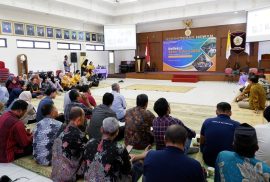
Ramadhan 1447 H, the Faculty of Veterinary Medicine (FVM) Universitas Gadjah Mada (UGM) held an ifthar party with all its members on Friday (14/03/2025) at the auditorium. The event served as a place to strengthen the ties of friendship and togetherness among the academic community of FVM UGM.

The event was attended by lecturers, education staff, and student representatives. In addition, FVM UGM also invited =&0=&to give a homily about getting to know animal world through Islamic perspective in which he explained about the creation of nature, genetics, and bioacoustics.

The event was started by a speech from the Head of the Administration Office, Triyanto S. H. He expressed his gratitude to the lecturers, education staff, and student representatives who had attended this activity and for the committee who had arranged the agenda. Furthermore, he explained that a series of activities in the month of Ramadhan 1446 H at the Faculty of Veterinary Medicine UGM including: Tadarus (reciting) Al Qur’an (30 minutes before office hours start and during break time), distributing Alms Boxes in each Department and work unit. Later on, the amount from the boxes will be distributed to Contract workers and Outsourced workers. He also said that this event began with the Lihat   Selengkapnya

Faculty of Veterinary Medicine UGM Inaugurated Husband and Wife to Become Professors

News Friday, 14 March 2025

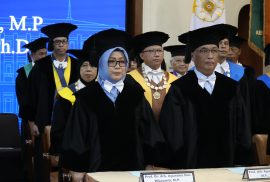
Husband and wife lecturers from the Faculty of Veterinary Medicine were inaugurated together as Professors of Universitas Gadjah Mada on Thursday (27/2) in the Senate Hall Room of the UGM Central Building. The pair are Prof. drh. Agung Budiyanto, M.P., Ph.D (Vice Dean for Academic and Student Affairs, FVM UGM) and Prof. Dr. drh. Agustina Dwi Wijayanti, M.P. (Head of the Department of Pharmacology, FVM UGM). Each of them, respectively, is a professor in the fields of Veterinary Ruminant Reproductive Biotechnology, and Veterinary Pharmacokinetics and Therapeutics at the Faculty of Veterinary Medicine.

Prof. Agung Budiyanto began his education at Faculty of Veterinary Medicine UGM in 1988, while Prof. Agustina started her studies at FVM UGM in 1990. They were senior-junior and had known each other since they were in college. The couple finally married on April 9, 1998 and were blessed with two sons.

In the inauguration ceremony, Prof. Agung Budiyanto delivered a speech entitled Application of Veterinary Reproductive Biotechnology and Genetic Mapping in Improving the Quality and Population of Cattle in Indonesia. In his speech, Prof. Agung Budiyanto conveyed that genetic selection of bulls, breeding cows, calves or heifers will provide an important contribution in maintaining and improving the genetic quality of community cattle. The forms of reproductive technology that have been, are being, and continue to be developed massively in Indonesia are artificial insemination, estrus synchronization, and genetic mapping.

Prof. Agustina Dwi Wijayanti in her speech delivered about the Role of Veterinary Pharmacokinetics and Therapy in Global Health (One Health). She conveyed that veterinary pharmacokinetics has a contribution as a basis for determining the optimal dosage of drugs for animals, resulting in an effective dose and duration of drug administration to kill microbes completely. The role of pharmacokinetics together with veterinary pharmacodynamics will inhibit the occurrence of AMR (Antimicrobial resistance) by ensuring that microbes will be killed and preventing the formation of resistant strains. In terms of food safety, the role of veterinary pharmacokinetics is to provide data related to the rate of elimination, drug half-life, withdrawal time (drug stop time), and determine the maximum residue limit of drugs used for animal health so that they are safe for consumption.

After the inauguration ceremony was over, Prof. Agung and Prof. Tina hosted a tasyakuran and shared a meal at Wisma Kagama UGM with the guests. The event was also attended by KaHaRontjong, consisting of lecturers and staff from FVM who are skilled in music. The thanksgiving was attended by more than 500 people and went lively.

The inauguration and tasyakuran event supported the values ​​of the Sustainable Development Goals (SDGs), including SDG 2 Zero Hunger, SDG 4 Quality Education, and SDG 16 Land Ecosystems.Lihat   Selengkapnya

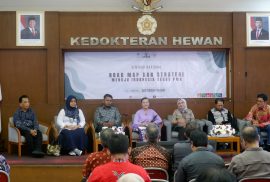
Faculty of Veterinary Medicine UGM held a National Seminar entitled “Road Map and Strategy towards a FMD-Free Indonesia”.

News Thursday, 30 January 2025

Friday, January 17th 2025 Faculty of Veterinary Medicine UGM held a National Seminar entitled “Road Map and Strategy towards a FMD-Free Indonesia”. This activity was carried out in a hybrid manner, offline at the faculty auditorium, and online via the zoom application and YouTube streaming. This seminar invited 8 speakers and was attended by more than 600 online participants and 120 offline participants. This national seminar discusses the urgency of FMD cases that attack ruminant livestock which have spread again in various regions in Indonesia, as well as cross-sectoral strategies that will be implemented to prevent and control FMD in livestock in the field. This National seminar event was officially started by the Dean of the Faculty of Medicine UGM, Prof. Teguh Budipitojo, DVM., MP., Ph.D. who is also the chairman of The Association of Indonesian Veterinary Medicine Faculties (AFVMI).

The first material was delivered by the Director General of Animal Husbandry and Animal Health (PKH) of the Indonesian Ministry of Agriculture, Dr. Agung Suganda, DVM., M.Sc. regarding the Road Map for Eradication and the Current Situation of FMD in Indonesia. The Strategic Framework for a FMD-Free Indonesia 2035 is outlined in 8 pillars, including FMD vaccination, continuous observation of FMD (surveillance), strict biosecurity and restrictions on the movement of animals susceptible to FMD, preparedness and emergency response to FMD, restoration of productivity of ruminant livestock after being affected by FMD, handling the socio-economic impact of FMD, especially for people’s livestock, and coordinating with stakeholders from within and outside the country. The Ministry of Agriculture encourages the implementation of Independent Vaccination and ensures the availability and access to good quality of FMD vaccines.

Then the second speaker, Prof. Dr. AETH Wahyuni, DVM., M.Sc., a Professor from the Department of Microbiology FVM-UGM, said that Foot and Mouth Disease (FMD) is an infectious disease that attacks cloven hoofed animals, both livestock such as cows, goats, buffalo, sheep and pigs as well as wild animals such as deer, bison, giraffes and even elephants. FMD is caused by the Foot-and-Mouth Disease Virus (FMDV) and is not a zoonotic type because this disease is not transmitted to humans. FMD itself is a serious Transboundary Disease because it is very contagious, can spread nationally and internationally quickly and unexpectedly.

The third speaker, Dr. M. Munawaroh, DVM., MM., General Chair of the Indonesian Veterinary Medical Association (IVMA), explained that handling the FMD outbreak requires a comprehensive and collaborative approach by all parties. Some of the recommendations given are the restoration of affected farms, improving the skills of veterinarians and veterinary medical officers in the field. Invest in vaccine and treatment research, carry out regular vaccinations for a minimum of 5 years.

The role of Veterinary Colleges in Handling FMD was conveyed by the fourth speaker, Prof. Agung Budiyanto, DVM., MP, Ph.D. These various roles include, forming an FMD task force team (Satgas) at the university level consisting of lecturers and students, providing clinical and laboratory experts to diagnose the virus that causes FMD, providing communication and educational information (KIE) to the community, one of which is through the annual community service programs done by students, study programs, and departments.

Next, Dr. Ir. Indyah Aryani, MM, as Head of the East Java Province Livestock Service, shared experiences and steps to control FMD in East Java since 2022. Actions taken include cage-based isolation of sick livestock, lockdown in village or sub-district-based FMD infected areas, symptomatic treatment of sick livestock, temporary closure of animal markets, restrictions on livestock traffic, disinfection of cages and the environment, conditional slaughter and mass vaccination FMD. Furthermore, Retno WIdiastuti, DVM., the sixth speaker, who is the Head of the Animal Health Division at the Animal Husbandry and Animal Health Service in Gunung Kidul Regency also explained the steps taken when FMD cases occurred. She said the steps including submitting an additional budget ahead of PERBUB Amendments to the Gunungkidul Regency’s APBD, responding to livestocks’ death reports and case tracking, sampling, burying livestock carcasses, case surveillance, cross-sectoral coordination, treatment of sick livestock in the field, disinfection of cages and the environment, giving vitamins to healthy livestocks, Communication, Information and Education (KIE), animal health checks in markets, supervision of livestock traffic, and supplies of medicines and disinfectants.

From the private livestock industry, Nanang Purus, DVM, Director of Feedlot PT. Indo Prima Beef from Lampung conveyed the impact of the huge economic losses experienced by farmers if their animals were infected with FMD. The direct impact seen is a reduction in body weight, a decrease in milk production, and even death of the animal. This direct impact has a big influence on the indirect impact because it causes an increase in costs, including slaughter costs, monitoring animal traffic and quarantine measures, additional surveillance costs and livestock vaccination costs. This also results in lost income in the form of industrial disruption and losing export opportunities. Steps taken to prevent the spread of FMD include tightening the SOP for animal traffic. Starting before the animals are departed, then entering the quarantine station, to the implementation of very strict biosecurity including biosecurity for all guests and customers, vehicle biosecurity, regular spraying of disinfectant on pens and livestock equipment, and vaccination for each cow arriving. Vaccination has been proven to be effective in preventing cows from potentially contracting FMD. Feedlot cattle that are 100% vaccinated have proven to have 0 (Zero) cases since vaccination was treated.

From the perspective of ruminant practitioners, Bima Ade Rusandi, DVM as the seventh speaker said that the condition of livestock farmers is currently still in the recovery stage since the FMD occurred in 2022. In the short term, what farmers want is accelerated treatment in outbreak areas, tightening livestock traffic and animal markets, and accelerating vaccine distribution in areas where there are still lots of healthy livestock. In the medium term, breeders want to carry out comprehensive supervision of livestock traded in the market and at the trader level. Strict monitoring of healthy animals by veterinarians. In the long term, increase human resources in the livestock sector, both as breeders and officers.

The event continued with a discussion and question and answer session moderated M.Th.  Khrisdiana Putri, DVM., MP., Ph.D. From the speakers’ insight and discussion sessions, several important points that can be concluded are the need to procure vaccines according to the number of doses needed in the field (either through grant or independent schemes), optimizing the budget for handling FMD, which includes increasing the budget for vaccination, treatment, and biosecurity implementation, optimizing Communication, Information and Education (KIE) activities to the community (breeders as producers, breeders as consumers and society at large) regarding the importance of FMD, the importance of accelerating vaccination, and implementing strict biosecurity.

Apart from that, the universities need to increase the knowledge revolving FMD handling in Indonesia through collaborative research that involves more students and lecturers. Next, they need to provide a special budget for vaccinators and personal support teams in the field, and encourage the Minister of Agriculture to issue a decree stating that FMD is an epidemic so that all stakeholders can play an active role in handling FMD throughout the region.

This national seminar activity supports the values ​​of Sustainable Development Goals (SDGs), including zero hunger, good health and well-being, quality education, responsible production and consumption, life on land, and partnerships for the goals.

Lihat   Selengkapnya

JICA Collaboration (UGM Faculty of Veterinary Medicine and Yamaguchi University Faculty of Veterinary Medicine) in Innovation of Cattle Reproductive Technology for Meat Self-Sufficiency

News Friday, 24 January 2025

The reproductive performance of beef cattle plays an important role in the livestock industry. Oestrus is a reproductive criterion that must be met before livestock can reproduce. Oestrus is influenced by the age and weight of the cattle, in addition, oestrus is also influenced by the type of cattle, nutrition, and reproductive health. Foot and Mouth Disease (FMD) is a highly contagious viral disease that attacks hoofed animals such as cattle, buffalo, and goats. Cattle infected with FMD will experience reproductive disorders such as anoestrus, ovarian hypofunction, and silent heat. FMD has a significant impact on the economy of livestock farmers, affecting the price and number of livestock, in East Java, the FMD outbreak has infected thousands of livestock in 23 districts/cities.

Achieving the target of “one cow, one calf, one year” faces several challenges in the effort to achieve beef self-sufficiency in Indonesia. Import dependence is still high, reaching 35% of national needs. Strategies that can be carried out to increase production include developing production centres, exploring feed sources, saving productive female cattle, and implementing artificial insemination technology. Synchronization-Sexing-Ultrasound (SSU) technology is the latest innovation to increase cow pregnancy. This technology combines oestrus synchronization using the Ovsynch method, sexing technology to select the sex of the calf according to needs, and ultrasound to detect pregnancy quickly and accurately. Ovsynch is effective for oestrus synchronization in various livestock, but the results vary depending on the mating season, species, and protocol. Optimal results are seen in sheep and goats, while in PO cattle it produces a high oestrus response but moderate pregnancy rates.

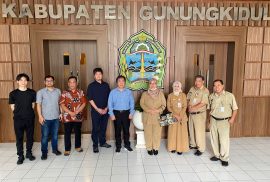
The collaboration between the Faculty of Veterinary Medicine UGM and the Faculty of Veterinary Medicine Yamaguchi University through the Japan International Cooperation Agency (JICA) in Gunung Kidul, Yogyakarta, has successfully implemented the Ovsynch method and fix timed artificial insemination (FTAI) in PO cattle and crossbred cattle. This technology is effective for cattle with reproductive disorders, including ovarian hypofunction and delayed ovulation. Sexing technology allows for the selection of calf sex, while ultrasound accurately detects pregnancy. This collaboration supports the development of research, higher education, and further studies, as well as fulfilling the Main Work Indicators (IKU) 3, IKU 5, IKU 6, IKU 7 and IKU 8 from the Ministry of Education and Culture, involving lecturers and students of FKH UGM in research and community service. This activity fulfil the 2nd (Zero Hunger) and 17th (Partnerships for the Goals) SDGs. (GES/YAMAS)Lihat   Selengkapnya

Faculty of Veterinary Medicine UGM Inaugurated 191 New Veterinarians

HighlightsNews Friday, 24 January 2025

Tuesday, the 16th of January 2025, Faculty of Veterinary Medicine UGM held Veterinary Inauguration Ceremony for 2024 December

Lihat   Selengkapnya

Year End Reflection at the Faculty of Veterinary Medicine UGM, Commitment toward Quality Improvement in 2025

News Friday, 3 January 2025

As the end of the year is nearby, the Faculty of Veterinary Medicine (FVH) UGM is holding its annual reflection agenda on the achievements earned and challenges faced during 2024. The 2024 Year End Reflection was held on Tuesday, December 31th, 2024 in the Auditorium building. This activity was attended by all lecturers and educational staff of FVM UGM. This activity is held to evaluate the work progress throughout the day including achievements, challenges and strategy tips. During this activity, work programs that have been implemented from all departments and units are also on display in the form of posters.

Dean of the Faculty of Veterinary Medicine, Prof. drh. Teguh Budipitojo, M.P., Ph.D in his speech expressed his appreciation for the hard work of the entire Faculty of Veterinary Medicine UGM community. “This year, through TCK (Performance Achievement Targets), we succeeded in achieving a number of targets set by the university,” he said. The targets that have been achieved by FVM UGM include study program accreditation, number of citations held by FVM UGM lecturers, international collaboration, and community service (SDGs 16: Peace, Justice and Strong Institutions, SDGs 17: Partnerships for the Goals).

However, the faculty also faces a number of challenges, such as improvements in academic and student affairs services, all indicators in TCK can be exceeded, and increased creative funding in work units such as Prof. Soeparwi Animal Hospital and Smart Veterinary Teaching Farm (SVTF). The Year End Reflection activity was also entertained by musical performances by Faculty of Veterinary Medicine UGM lecturers and staff and ended with lunch together (SDGs 2: No Hunger, SDGs 10: Reducing Inequalities, SDGs 17: Partnerships to Achieve Goals).Lihat   Selengkapnya

International Students Gathering 2024: A Mingling Pod

Student Activity Wednesday, 4 December 2024

Yogyakarta – Sunday, the 20th of October 2024, the mentorship team from the Faculty of Veterinary Medicine, Gadjah Mada University held the International Students Gathering 2024. This activity was attended by 2024 International Undergraduate Program (IUP) freshmen. There are 17 students from Malaysia joined as mentees. The event was held at Goa Cemara Beach, Bantul, Yogyakarta.

The mentorship program facilitated by FVM UGM aims to help the adaptation of foreign students studying in Yogyakarta, Indonesia. Each will be assisted by a mentor who is their senior. Mentors can be a learning partner, as well as be a place to ask questions about campus life and daily life in Yogyakarta. The mentors also help teaching Bahasa Indonesia to their respective mentees so that it is easier for them to blend in when studying at FVM UGM.

On the occasion of the  International Students Gathering 2024, the event started with relaxing exercises by the Vice Dean for Academic and Students Affairs, namely drh. Agung Budiyanto, M.P., Ph.D. This is a warm-up activity before the mentor and mentee do field trips and fun games. Of course this increases body fitness and lightens the atmosphere.

After that, the event continued with games as a means of closer introductions among mentors, mentees, the head of study program, the secretary of study program, and the FVM UGM academic team. Participants were asked to introduce themselves, demonstrate their favorite pets and favorite subjects. This resulted in lots of laughter.

The next event was fun games, namely Capture the Flag and Nick the Balloon. This aims to strengthen solidarity, as well as exchange traditional gaming culture between students from Malaysia and students from Indonesia. After playing, a lunch session was held together. Students from Malaysia had the opportunity to taste food speciality from the coastal region of Yogyakarta, Indonesia. The event was exciting, enjoyable and useful.

The International Students Gathering supports the SDGs points, including SDG 2 No Hunger, SDG 4 Quality Education, SDG 16 Peace, Justice and Resilient Institutions.Lihat   Selengkapnya

Healthy Breakfast to Face the Finals

News Monday, 2 December 2024

The Final Semester Examination (UAS) for Faculty of Veterinary Medicine (FKH) UGM starts on Monday, December 2nd to Friday, December 13th 2024. Therefore, in order to support students who are focused on facing their finals, Faculty provides free breakfast for all participants who took the exam at 07.15. A total of 1,042 portions are provided during the finals. The breakfast given is expected to provide balanced nutrition, namely rice as carbohydrates, side dishes as protein, vegetables as fiber and vitamins, and fruit. This is done to ensure that students have sufficient energy and are able to concentrate to face their final exams and do not have any difficulties finding breakfast outside the campus. (SDG 2: Zero Hunger). Moreover, as we realized that the exam is carried out on December, where the weather is getting colder and the rainy season is in its highest peak, students are more prone to get a cold or fever. The breakfast works as an effort to prevent the sickness. (SDG 3: Health and Well-being)

Positive responses came from students who were greatly helped by the free breakfast when completing exams. They also praised that the food provided was delicious and that they no longer needed to think about breakfast after the exam. Apart from that, some students also said that free breakfast also helped them focus on studying the material for the next exam.

During the exam period and getting breakfast, students are encouraged to bring their own cutlery and drinking bottles. This appeal aims to reduce plastic waste that comes from when they eat breakfast, such as plastic spoons and glass mineral water (SDG 12: Responsible Consumption and Production).

This year’s final exam, Faculty of Veterinary Medicine UGM also tightened the rules for exam participants. Rules and regulations are promoted in order to create honest exams, cheating-less environment, and increase student enthusiasm to study harder so as to obtain satisfactory results. This is also supported by holding training for educational staff who serve as supervisors on Friday, November 29 2024 so that the Final exam for Odd Semester 2024/2025 can run in an orderly and conducive manner (SDG 4: Quality Education)

Author: Yanis Ramadhanti, S.Pt & Dea D. N. S.PdLihat   Selengkapnya

123
Universitas Gadjah Mada

Faculty of Veterinary Medicine
Universitas Gadjah Mada

Jl. Fauna No. 2 Karangmalang, Yogyakarta 55281 Indonesia

fkh@ugm.ac.id
+62 (274) 6492088
+62 (274) 560862
+62 (274) 560861

© Faculty of Veterinary Medicine Universitas Gadjah Mada 2025

Aturan PenggunaanKontak

KEBIJAKAN PRIVASI/PRIVACY POLICY

[EN] We use cookies to help our viewer get the best experience on our website. -- [ID] Kami menggunakan cookie untuk membantu pengunjung kami mendapatkan pengalaman terbaik di situs web kami.I Agree / Saya Setuju